
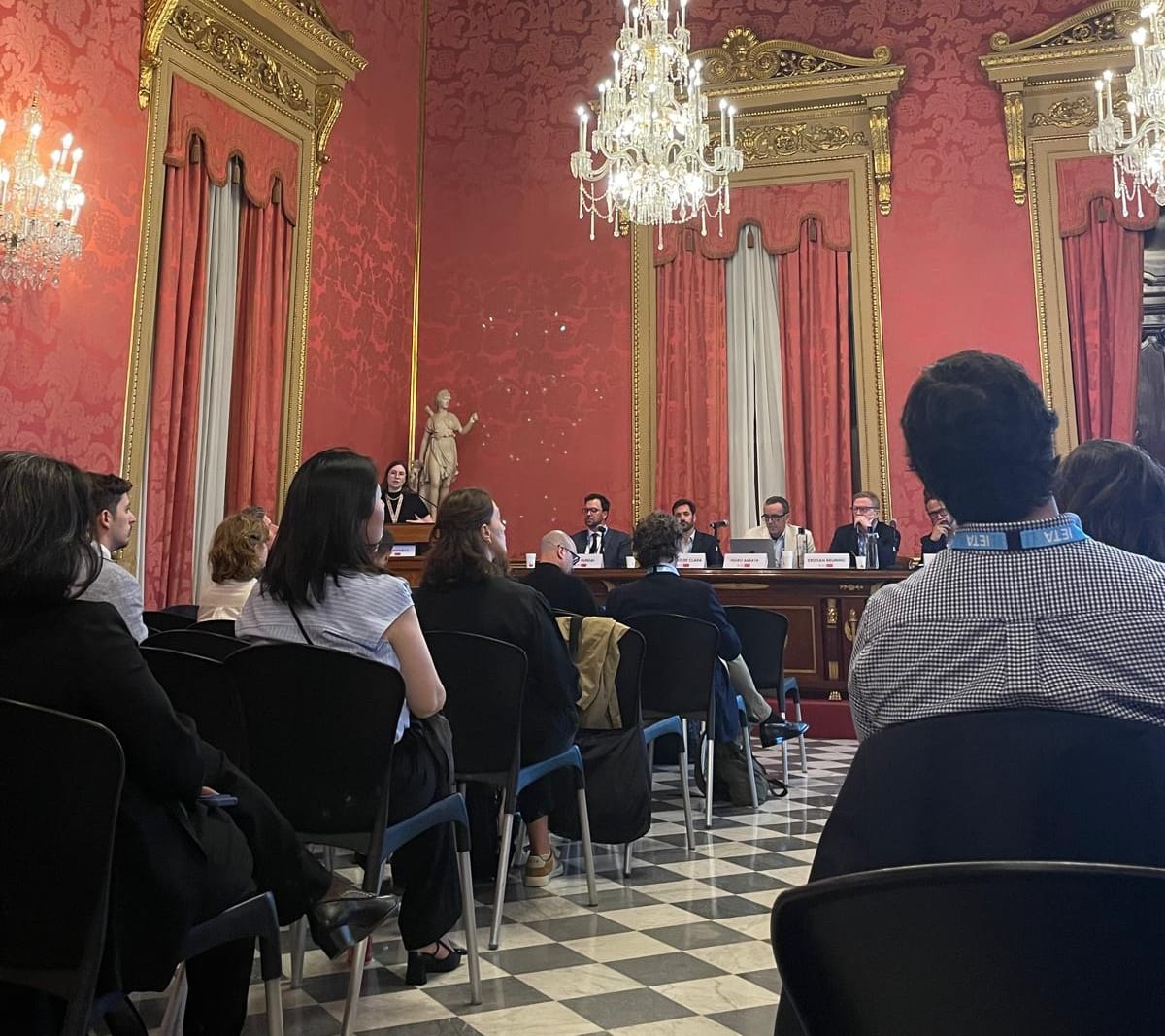
The European Climate Summit 2026, organised by IETA and held in Barcelona, brought together policymakers, investors, compliance market specialists and corporate sustainability leaders from across the globe to address the most pressing questions in carbon markets today. With the EU ETS under review, ETS2 on the horizon and voluntary carbon markets at an inflection point, the timing could not be more relevant for organisations building credible net zero strategies. Here are the key takeaways shaping how companies move from ambition to implementation.
1. Demand-side policy needs to move faster before companies can enter the market at scale
The voluntary carbon market is not short of interested buyers. What it is short of is the policy clarity that would allow the next wave of corporate buyers to engage with confidence. A workshop on scaling demand for carbon credits identified market complexity and the absence of credible claims guidance as the most significant barriers to corporate engagement at scale.
The market is currently positioned between the first and second generation of buyers. The first movers, organisations like Microsoft in carbon removal, entered early to shape the market and secure supply. The second wave, companies motivated by net zero claims and sustainability strategy, is waiting. But without clearer government guidance on how carbon credits can be used credibly in corporate decarbonisation claims, the commercial case for spending out of goodwill alone will not hold in an environment of tightening margins and cost pressure. For that second wave to move, policy has to lead.
2. Global carbon pricing is being redesigned around flexibility, not just ambition
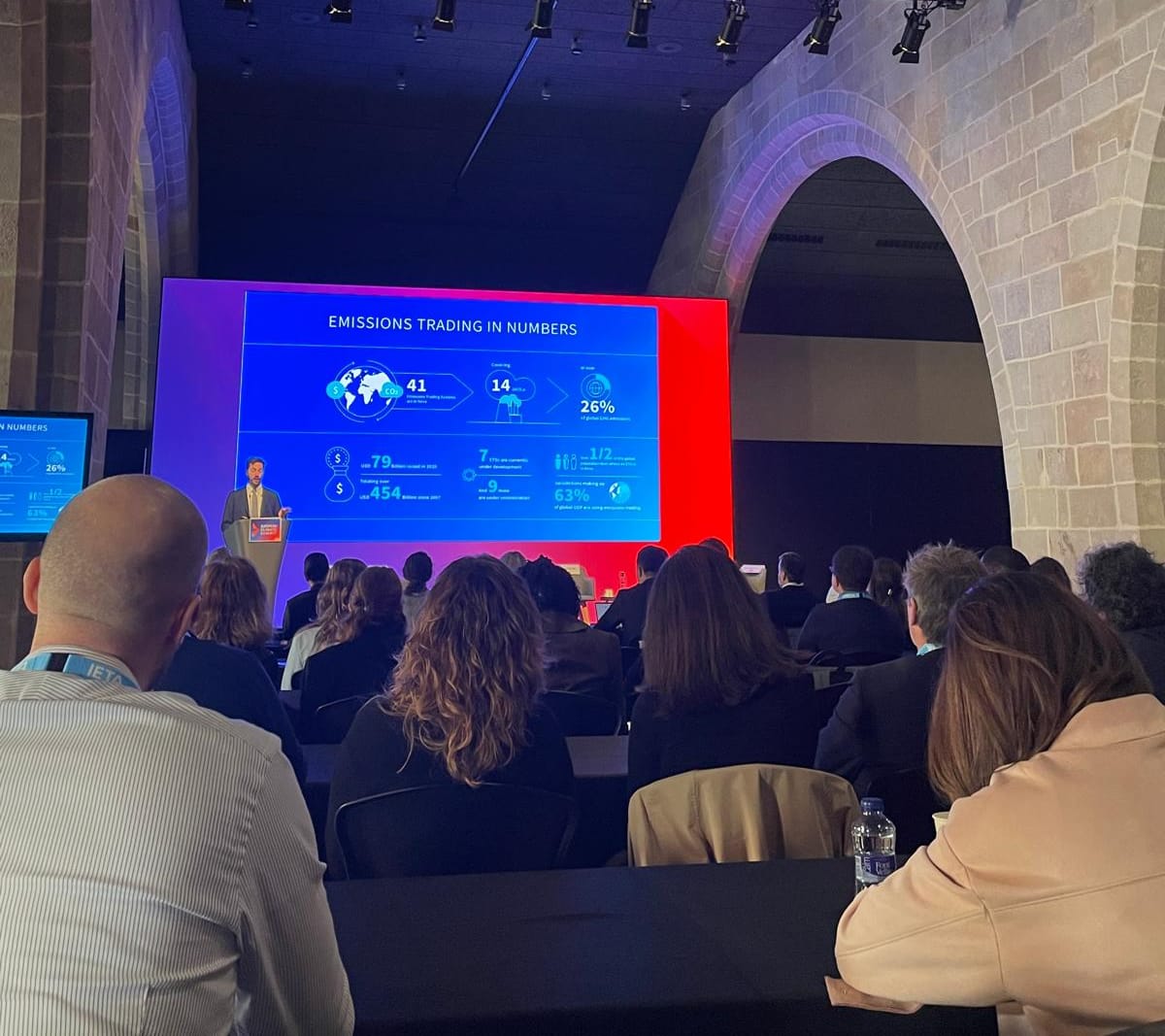
Carbon pricing now covers jurisdictions representing over 63% of global GDP and more than 26% of global greenhouse gas emissions. But 2026 is a year of significant redesign. Compliance schemes built in a different geopolitical and economic moment were optimised primarily for climate ambition, with energy affordability and security treated as secondary considerations. That balance is now being actively questioned.
The EU ETS review this summer is focused in part on alleviating the cost burden of carbon pricing on consumers and industry, without losing momentum on decarbonisation. The Market Stability Reserve is under review, and there is growing discussion around whether integrating carbon credits into compliance schemes could offer a cost-effective route to meeting obligations. That is a significant long-term demand signal for the voluntary carbon market. But the supply investment required to meet projected demand at that scale needs to start now, well ahead of when formal integration mechanisms come into force.
3. Alignment and convergence across carbon market frameworks is accelerating
The quality debate of recent years was necessary and the market has responded. Initiatives like the ICVCM’s Core Carbon Principles and the emerging Paris Agreement Crediting Mechanism are raising the global benchmark on what constitutes a credible carbon credit. The conversation at ECS 2026 was no longer about whether quality can be achieved, but about how to integrate high-quality carbon markets into broader policy architecture to scale demand.
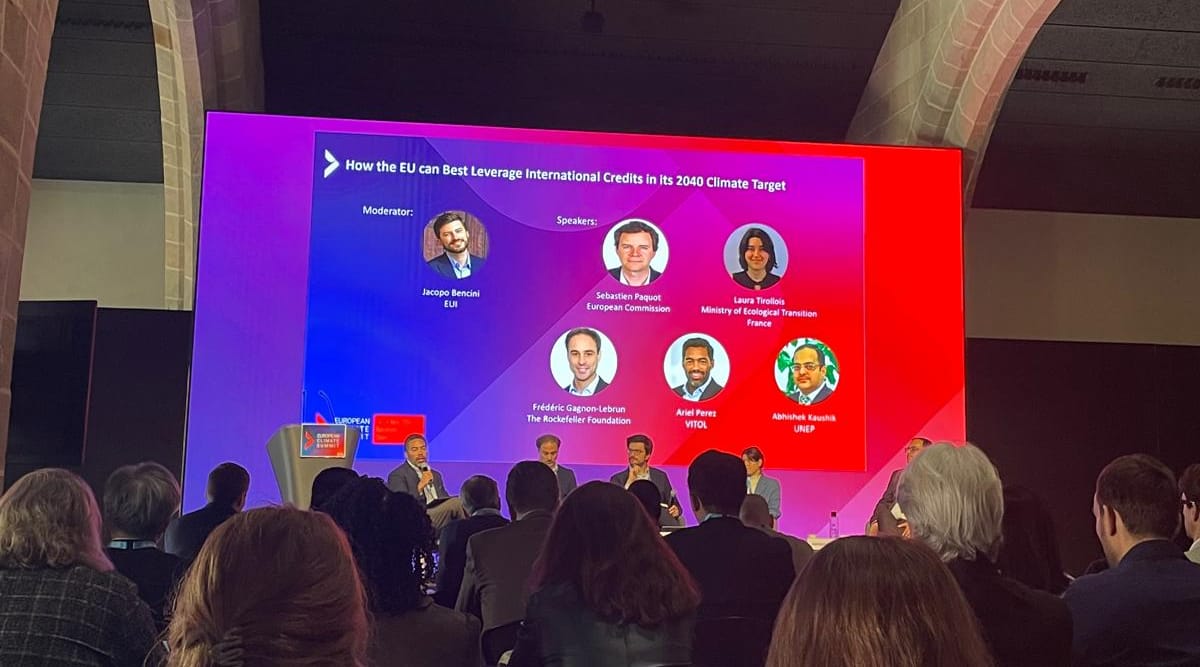
That integration is taking shape across compliance schemes, carbon taxes and government-level Article 6 negotiations. The EU is actively considering how international credits could contribute to its 2040 climate target, with NDC ambition from host countries likely to be a key procurement criterion. Article 6 is also increasingly being discussed as a diplomatic tool, not just a market mechanism. However, the private sector needs stronger and earlier demand commitments to invest at scale. The current signals, with EU demand from international credits potentially not materialising until 2031 or beyond, may not be sufficient to mobilise private capital in the volumes the market requires.
What this means for carbon markets
Demand for high-quality carbon credits is increasing, but it is not yet moving at the pace the supply side needs to plan and invest against. The signals from Barcelona point to a market that is technically more credible and institutionally better supported than it was two years ago. The harder problem is translating that into clear, bankable demand.
Buyers are prioritising integrity, transparency and alignment with recognised frameworks. The convergence of PACM and ICVCM standards is part of this, and the EU’s likely insistence on NDC ambition as a procurement criterion for Article 6 credits raises the bar further. For project developers and intermediaries, this is positive in the long run. In the near term, it adds layers of complexity that not all market participants are equipped to navigate.
The gap between commitment and execution remains the biggest barrier in the market. Governments have signalled intent on Article 6 integration, compliance scheme reform and demand-side frameworks. What is still missing is the timing and specificity that allows the private sector to make capital allocation decisions with confidence. Corporate buyers are in a similar position: many have sustainability strategies that include carbon credits in principle, but lack the internal frameworks and external policy certainty to act on them at scale.
The “green hushing” dynamic continues to suppress visible corporate engagement, even as private conversations reflect genuine interest and strategic intent. In that environment, the companies that are building knowledge, governance and supplier relationships now are accruing a compounding advantage over those waiting for the market to become simpler.
This is where structured approaches and platforms like Carbonaires support faster, more credible decision-making in carbon markets, carbon removal and wider corporate decarbonisation strategy.
Carbonaires perspective
At Carbonaires, we see three clear shifts emerging from the discussions in Barcelona.
First, the policy and market infrastructure for carbon credits is converging, but the demand signal is lagging behind the supply-side progress. Quality frameworks are maturing, Article 6 rules are developing, and compliance integration is on the table. What the market now needs is governments to provide demand-side certainty early enough for private capital to respond. Carbonaires actively engages in advocacy work aimed at cutting through complexity, simplifying market access, and providing companies with the practical guidance to engage in carbon markets credibly and at pace.
Second, the window for first-mover advantage in corporate carbon procurement is narrowing. The companies entering the voluntary carbon market now are doing so with an understanding that supply of high-integrity credits is structurally limited, that early offtake agreements deliver better pricing and terms, and that building internal capability takes time. As compliance integration proceeds and Article 6 demand scales, the competition for quality supply will intensify. Waiting for greater policy certainty is a rational position in the short term. It is increasingly a costly one over a three to five year horizon.
Third, carbon markets are becoming an instrument of trade and diplomacy, not just climate policy. The EU’s use of CBAM to export its carbon price signal, its consideration of Article 6 credits in its 2040 target, and the framing of bilateral carbon agreements as tools of NDC enforcement all point to a market that is being embedded into the architecture of global economic relations. For corporate buyers, this means carbon strategy and geopolitical strategy are converging in ways that were not true even two years ago.
Companies that act early will be better positioned as regulation tightens, supply concentrates and the cost of late entry rises.
Event details
Final thought
The frameworks are converging. The standards are improving. The political will, while uneven, is present in the markets that matter most. What the carbon market needs now is corporate buyers and policymakers to move at the same speed as the infrastructure being built.