Introduction
Existing and emerging technologies for Carbon Dioxide Removal (CDR)
Throughout the existence of our planet, natural systems have evolved and developed effective mechanisms for balancing carbon dioxide levels in the atmosphere. From the carbon cycle to the actions of plants and marine organisms, nature has been regulating CO₂ levels for millions of years. However, with the rapid rise of human‑induced greenhouse gas emissions, natural systems are struggling to keep up. As a result, there has been a growing focus on the emergence of man‑made engineered solutions specifically designed to tackle the additional burden of excess carbon dioxide. These innovative approaches aim to directly capture and remove CO₂ from the atmosphere or enhance natural processes that absorb and store carbon.
By leveraging engineered capture and storage solutions, the capacity of natural systems can be supplemented. Each technology comes with opportunities and challenges which this edition of the newsletter explores further. It is also worth acknowledging other approaches to carbon reduction such as bioenergy with carbon capture and storage (BECCS), biochar, ocean fertilisation and enhanced ocean alkalinity, all of which can play a crucial role in lowering CO₂. While natural systems will continue to play a vital role, the development and deployment of human‑engineered technologies provide essential ways to lower CO₂ and combat climate change.
Tackling the carbon problem means looking at two fundamental aspects: the capture of carbon from the air and its subsequent storage, and the avoidance of carbon emissions in the first place. We explore three promising carbon capture approaches in this newsletter: direct air capture (DAC), mineralisation for CO₂ storage and enhanced weathering.
Direct Air Capture
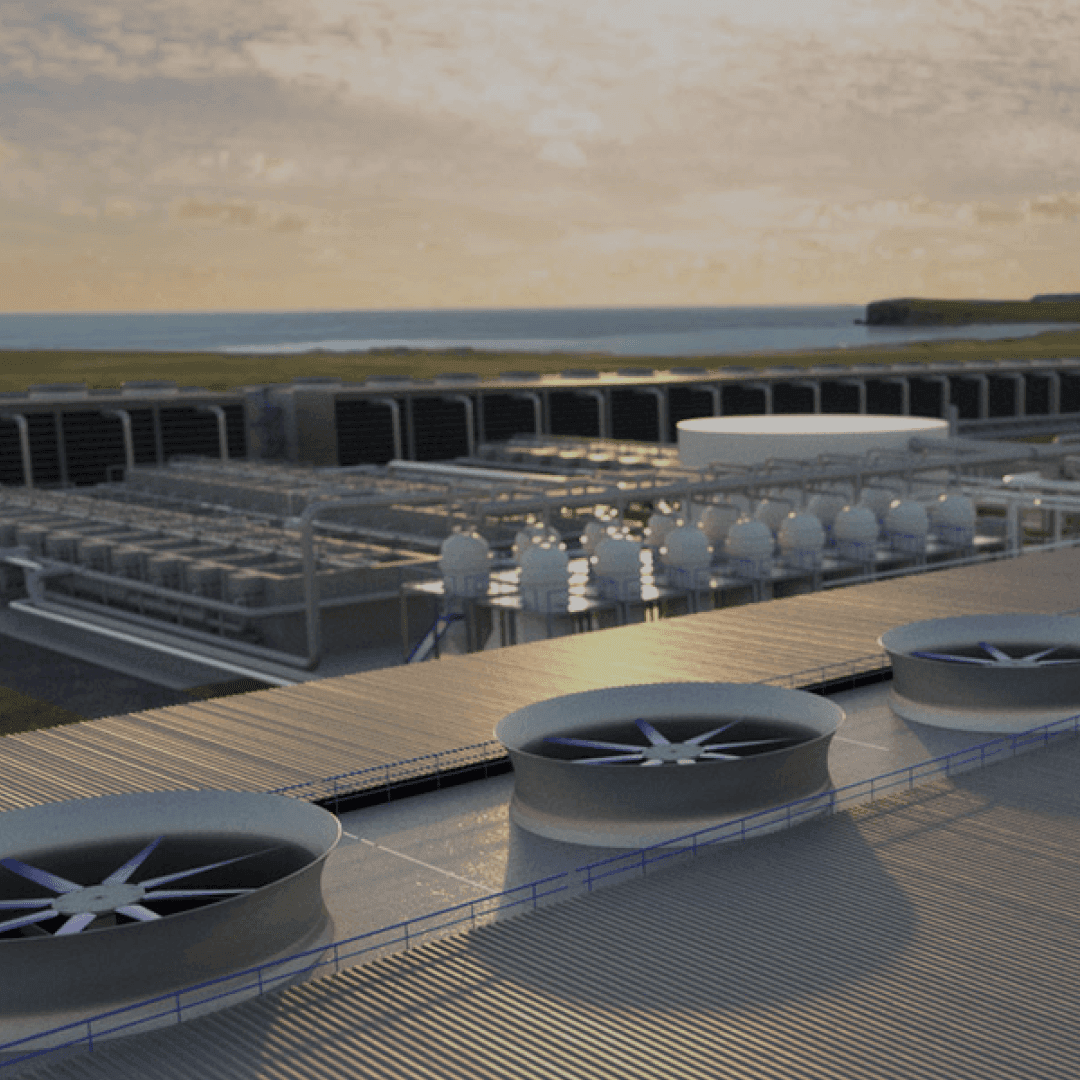
Direct Air Capture (DAC) is an innovative technology in which CO₂ is directly extracted from the ambient air, making it a versatile solution for carbon reduction. Unlike traditional carbon capture methods, DAC can target emissions from any source, including transportation and industrial processes. DAC involves pulling in air, filtering out particulate matter and using solid or liquid solvents to capture the CO₂, which can be stored underground, used in industrial processes or converted into valuable products.
DAC’s versatility and global applicability make it a scalable solution for CO₂ removal. However, challenges remain, including the energy‑intensive nature of the process and the need for sustainable energy sources. Research efforts are focused on finding cost‑effective solutions, developing more reusable sorbents and optimizing the overall process to enhance efficiency and reduce costs.
The carbon that is captured can be permanently stored in deep geological formations or used for a variety of applications, such as use in building materials. DAC therefore provides a unique pathway for achieving negative emissions and has the potential to contribute to our fight against climate change. Continued investment and development in DAC technologies will be essential in realizing its full potential and helping us transition towards a more sustainable and carbon‑neutral future.
Enhanced Weathering
Enhanced weathering speeds up natural processes that remove carbon dioxide from the atmosphere by grinding and spreading certain minerals, such as olivine or serpentine, which react with CO₂ and permanently store it as solid carbonate compounds. This approach not only captures CO₂ but also offers potential benefits for soil health, water quality and agriculture.
One of the key advantages of enhanced weathering is its ability to use readily available and abundant minerals, making it a potentially cost‑effective and scalable solution for CO₂ removal and storage. By accelerating natural weathering processes, this technique holds immense potential to remove carbon dioxide from the atmosphere and promote a more sustainable future. It can be integrated into existing land management practices, providing opportunities for improved soil fertility, increased crop yields and subsequent improved food security.
However, there are challenges that need to be addressed for effective deployment of enhanced weathering. Gathering a large volume of minerals for widespread implementation can be logistically complex. Additionally, the grinding and distribution of minerals require energy, which could lead to carbon emissions unless renewable energy sources are adopted. Furthermore, the type and storage of captured CO₂ needs careful management to prevent its release back into the atmosphere. Depending on the type of rock selected, there are potentially toxic contaminants within the rocks, in particular heavy metals. Therefore, stringent monitoring and verification processes are necessary to ensure the effectiveness of the carbon storage.
Research and development efforts are helping to improve our understanding of mineral selection, distribution methods and potential environmental impacts, guiding how we can effectively deploy enhanced weathering as a CO₂ removal technology.
Mineralisation for CO₂ Storage
Mineralisation for CO₂ storage, also sometimes referred to as mineral carbonation, reduces CO₂ levels in the atmosphere by permanently storing carbon dioxide in solid minerals. Through the process, CO₂ is captured either from industrial emissions or directly from the air where it is then reacted with certain types of rocks, like basalt, creating solid carbonates, with the CO₂ being either absorbed or removed from the air. The process then involves injecting the CO₂ dissolved in water into underground geological formations. These carbonates can be safely stored for centuries or millennia, preventing the CO₂ from being released back into the atmosphere, meaning mineral carbonation is a permanent form of CO₂ storage.
Mineral carbonation has several benefits as a method of carbon storage. The rocks needed for the process are abundant, making it a potentially scalable solution. This method shows promise as an effective way to reduce CO₂ levels and combat climate change, and further research and development will enhance the efficiency, cost‑effectiveness and environmental sustainability of mineral carbonation technology.
As the world grapples with the urgent challenge of mitigating climate change, technological advancements in carbon dioxide removal and storage offer promising solutions. To realise their full potential, it is essential to focus on continued research, development and widespread deployment of these innovative technologies, alongside advancements in materials and engineering. By harnessing and refining such processes, we can complement natural carbon sequestration and industrial emission reductions, ultimately averting a climate disaster and effectively combating global heating.