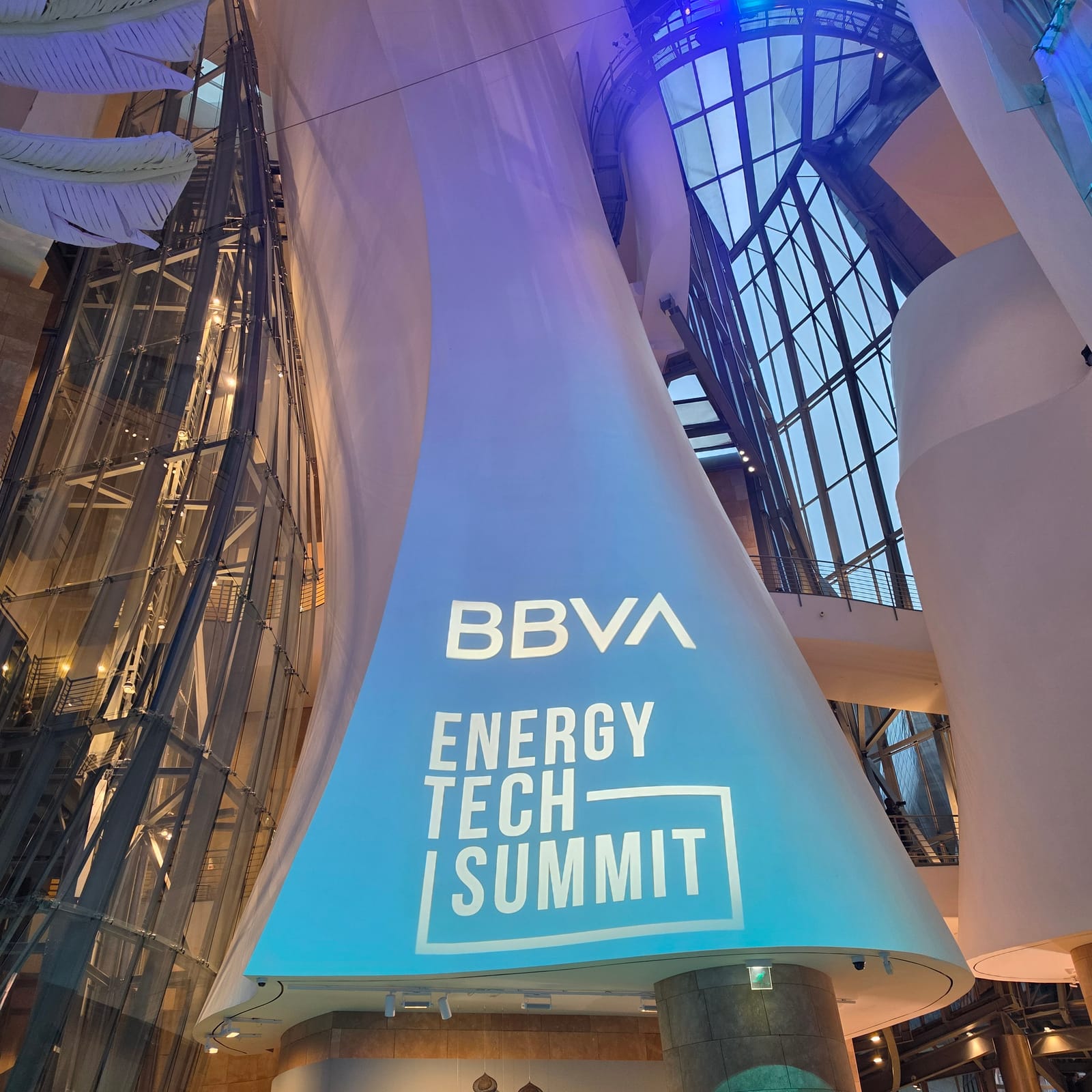
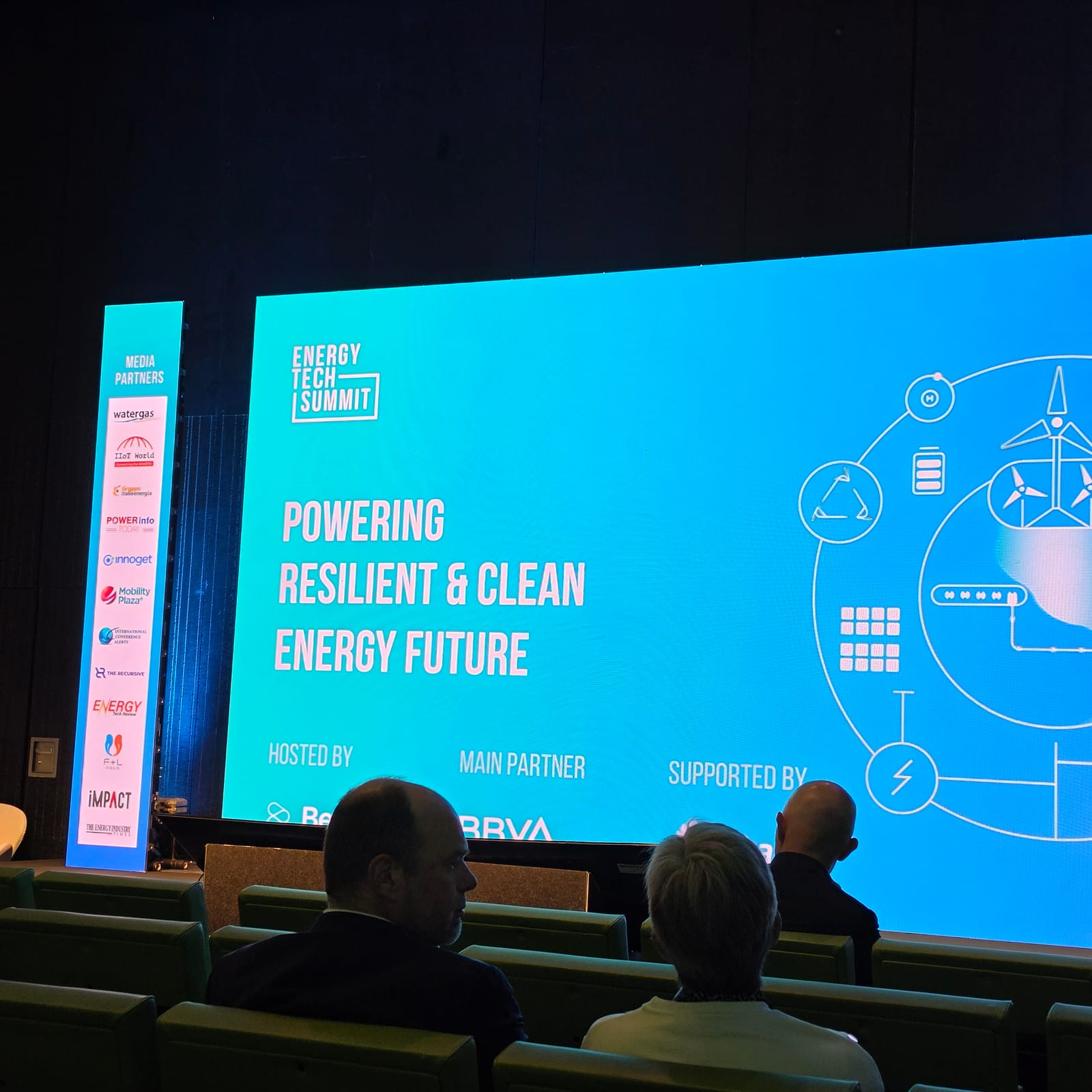
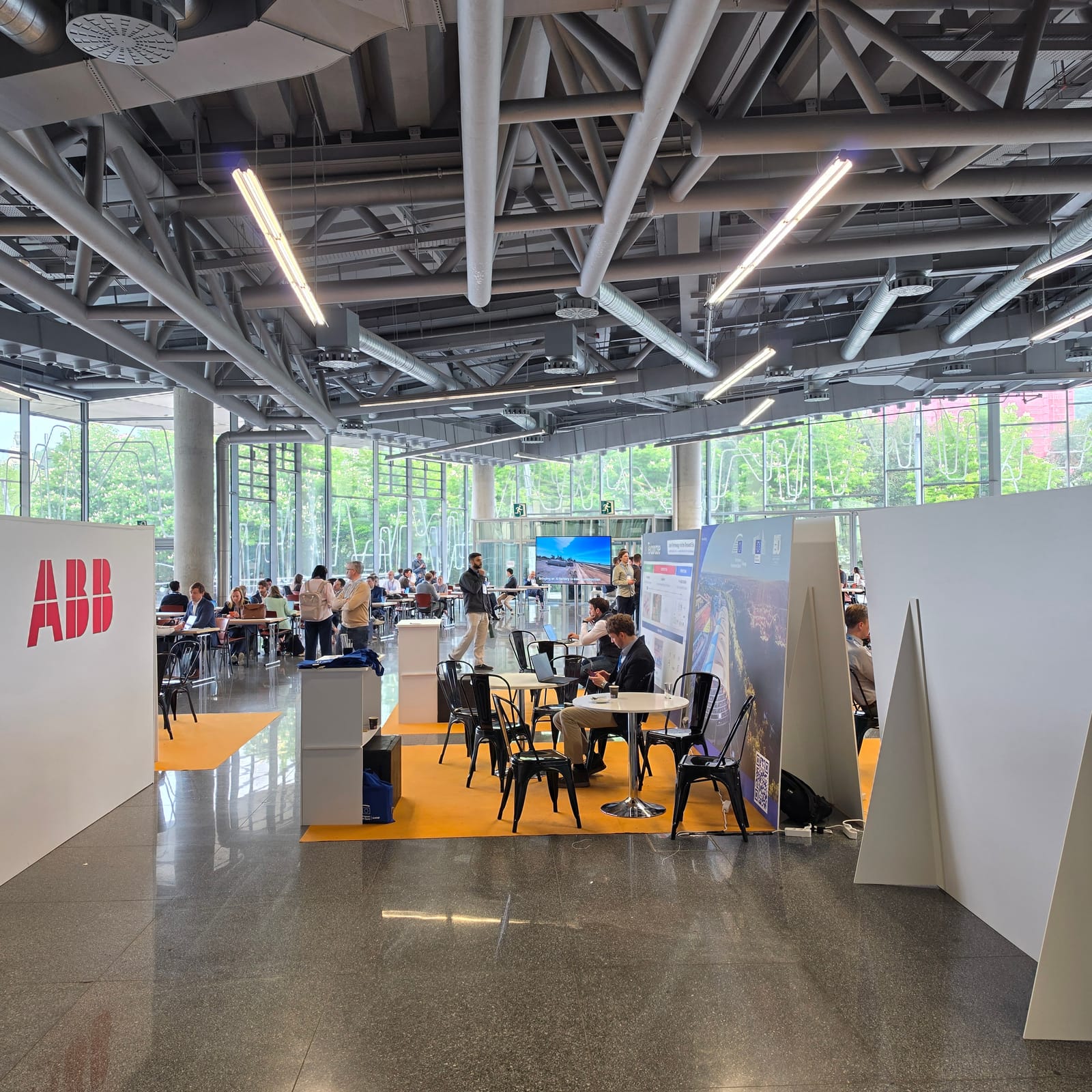
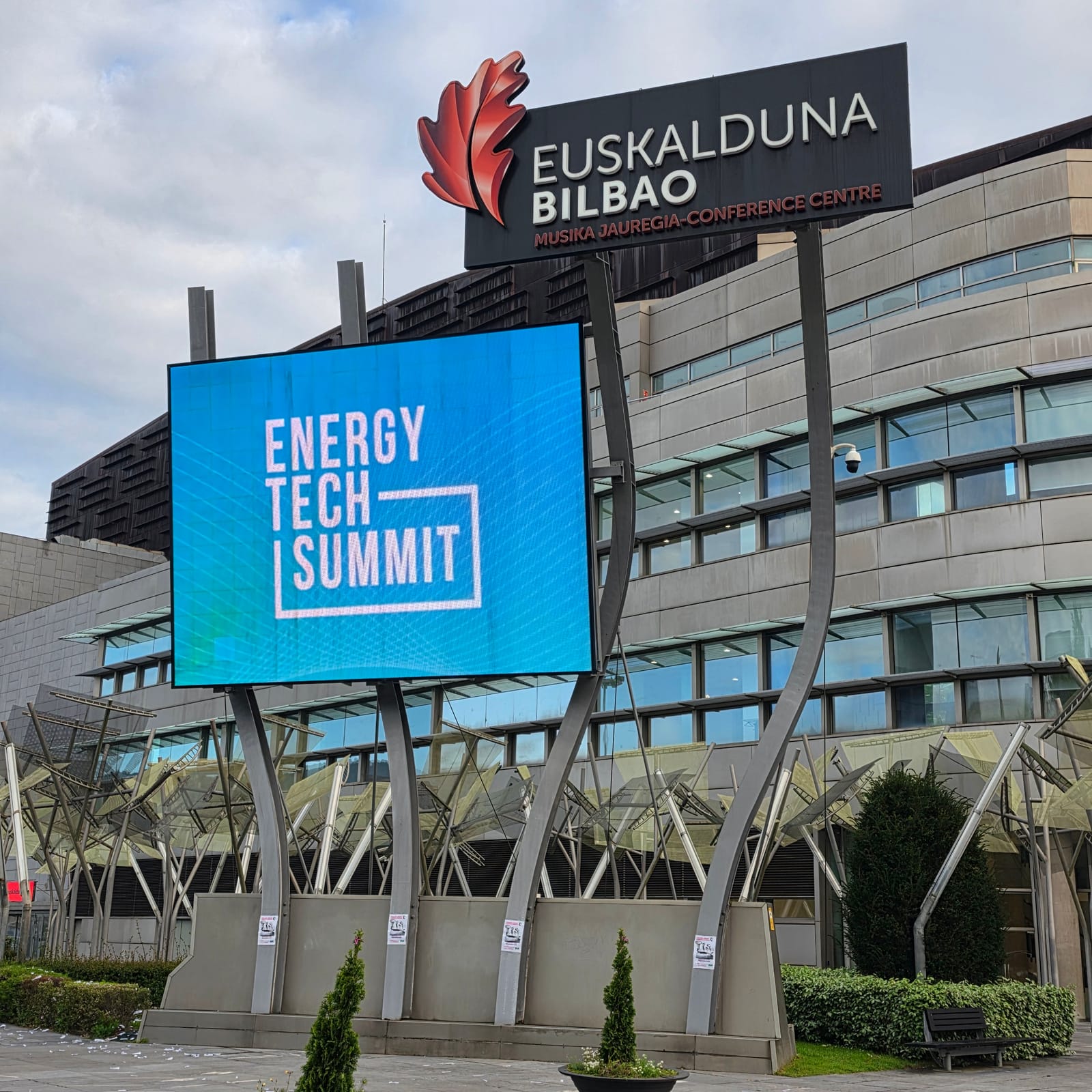
Energy Tech Summit 2026, held at the Euskalduna Conference Centre in Bilbao on 15 and 16 April, brought together more than 1,400 attendees from 51 countries to discuss the energy infrastructure build-out underpinning the AI and decarbonisation era. The audience skewed senior, with 47% of attendees at C-suite level. Capital allocators, hyperscalers, utilities and climate technology founders shared the room across three stages and 41 sessions.
We attended to listen. Our aim was simple. Spend two days inside the conversation that is currently shaping where global capital flows in energy and infrastructure, and bring back what it means for carbon markets and high-integrity carbon removal.
1. The energy conversation has fully absorbed the carbon question
Three years ago, climate panels and carbon market panels were scheduled in different rooms, and audiences self-selected. That separation has now collapsed. At Bilbao, almost every session on grid scale, gas turbines, SMRs, hyperscaler procurement and 24/7 carbon-free energy ended in a discussion of what to do with the residual emissions block that no procurement strategy fully solves.
Why it matters commercially: this convergence shortens the sales cycle for carbon removal. Operators and infrastructure investors are no longer asking whether they need a carbon removal strategy. They are asking which one is credible at scale and bankable today.
2. The “last twenty per cent” problem is the most quoted unsolved challenge
The most repeated framing across the two days was a version of the same arithmetic. Renewable power purchase agreements and 24/7 carbon-free energy programmes typically take operators to roughly 80 per cent matched clean energy. Closing the final 20 per cent through hourly matching becomes increasingly expensive. The IEA’s April 2026 special report confirmed this trade-off the same week. Onsite gas backup, often required for capacity firmness at gigawatt-scale datacentres, adds a further block of unavoidable emissions, with overbuild ratios cited at 30 to 70 per cent.
That residual block is the natural home for carbon removal. It is where physical decarbonisation strategies hit their limit and where neutralisation through removal becomes the only credible path to net zero this decade.
3. The capital story is bigger than people outside the sector realise
The IEA put cumulative datacentre investment at 3.9 trillion US dollars between 2026 and 2030, larger than worldwide upstream oil and gas spend over the same window. Bilbao made the human-scale version of this number visible. KKR, Bank of America, Iberdrola, BBVA, Shell, Khosla Ventures and Galvanize Climate Solutions all sent senior teams. The financing of the AI buildout is now the largest infrastructure deployment of our generation, and the rules that govern its emissions exposure are being written in real time.
For carbon markets, the implication is concrete. The most creditworthy buyers of carbon removal credits in the next decade are the same balance sheets currently financing datacentre and grid build-out.
4. Carbon removal is moving from sustainability cost into operator economics
Several conversations across the two days pointed toward the same broader shift. The most commercially serious operators are no longer treating carbon removal as a discrete sustainability spend, sized and procured after the fact. They are starting to think about removal inside the unit economics of compute itself, sitting alongside power, cooling and capacity.
The specifics of how that integration plays out will vary by operator, geography and counterparty. What matters is the direction of travel. Removal is being positioned as part of how the AI build-out is financed, not as a line item to be defended afterwards. This is the conversation we are most interested in carrying forward.
5. Stranded telecom infrastructure and distributed compute are the unsung opportunities
Two recurring side topics deserve attention. First, the reuse of stranded or underutilised telecom infrastructure with existing power and permits is being studied as a way to accelerate edge and mid-tier datacentre deployments. Second, the economics of distributed deployment, where 60 small one-megawatt facilities can be more feasible than a single 60-megawatt facility, are increasingly competitive once flexibility services to the grid are priced in.
Both pathways open new geographies for carbon removal partnerships. Distributed compute fits naturally with distributed CDR pathways, including biochar, biogenic capture and mineralisation.
What this means for carbon markets
Three things are becoming clearer from the direction of travel in Bilbao.
First, the residual emissions problem created by the AI buildout is structural and unsolvable through procurement alone. The 20 per cent that renewable purchasing cannot reach, combined with unavoidable emissions from onsite gas backup at gigawatt-scale facilities, creates a permanent and growing block that physical decarbonisation strategies hit their limit against. That block needs carbon removal. Not offsets, not RECs, not creative accounting. Actual removal of carbon, verifiable and durable. Buyers are no longer asking whether they need a carbon removal strategy. They are asking which one is credible at scale and bankable today.
Second, the buyer base for carbon removal is now the same balance sheet as infrastructure finance. The institutions in the room in Bilbao, infrastructure funds, hyperscalers, utilities and the banks financing the build, are not the early-adopter sustainability teams that defined CDR demand through 2024. They are investment-grade organisations with long-dated liabilities and rigorous due diligence expectations. They will approach carbon removal the way they approach any other infrastructure risk: with bankable structures, counterparty credibility requirements and a preference for partners who can deliver at scale. The gap between commitment and execution remains the biggest barrier, but the motivation to close it is now commercial as much as reputational.
Third, the commercial model is shifting from voluntary purchase to operator-embedded economics. The conversations at Bilbao made clear that the next generation of carbon removal demand will be designed into operator P&Ls from the outset, rather than bolted on once a facility is operational. That is a structurally more durable basis for the market, and it rewards supply-side players who can demonstrate genuine delivery capability rather than those selling volume at the lowest price.
This is where structured approaches and platforms like Carbonaires support faster, more credible decision-making in carbon markets, carbon removal and wider corporate decarbonisation strategy.
Carbonaires perspective
At Carbonaires, we see three clear shifts coming out of Bilbao.
Shift 1. Datacentre decarbonisation is now a primary use case for carbon removal, not a niche one. The energy infrastructure community is openly discussing carbon removal as a structural part of how the AI buildout is financed and reported.
Shift 2. The buyer base is broadening beyond the small group of hyperscalers that dominated CDR demand through 2025. The balance sheets behind grid build-out, infrastructure investment and corporate procurement programmes are entering the market.
Shift 3. The most commercially compelling models bundle carbon removal into operator economics directly. Co-location, premium green compute, and structured offtake into compliance reporting are no longer theoretical. They are being built.
Companies that act early on these shifts will be better positioned as regulation tightens and scrutiny increases.

Event details
Final thought
The next 18 months will decide which carbon market players are positioned to serve the demand the AI buildout is creating. The infrastructure decisions being signed in 2026 will lock in operators’ carbon exposure for a decade. Carbonaires is building for exactly that horizon.