Introduction
Tackling Climate Change in the MENA Region
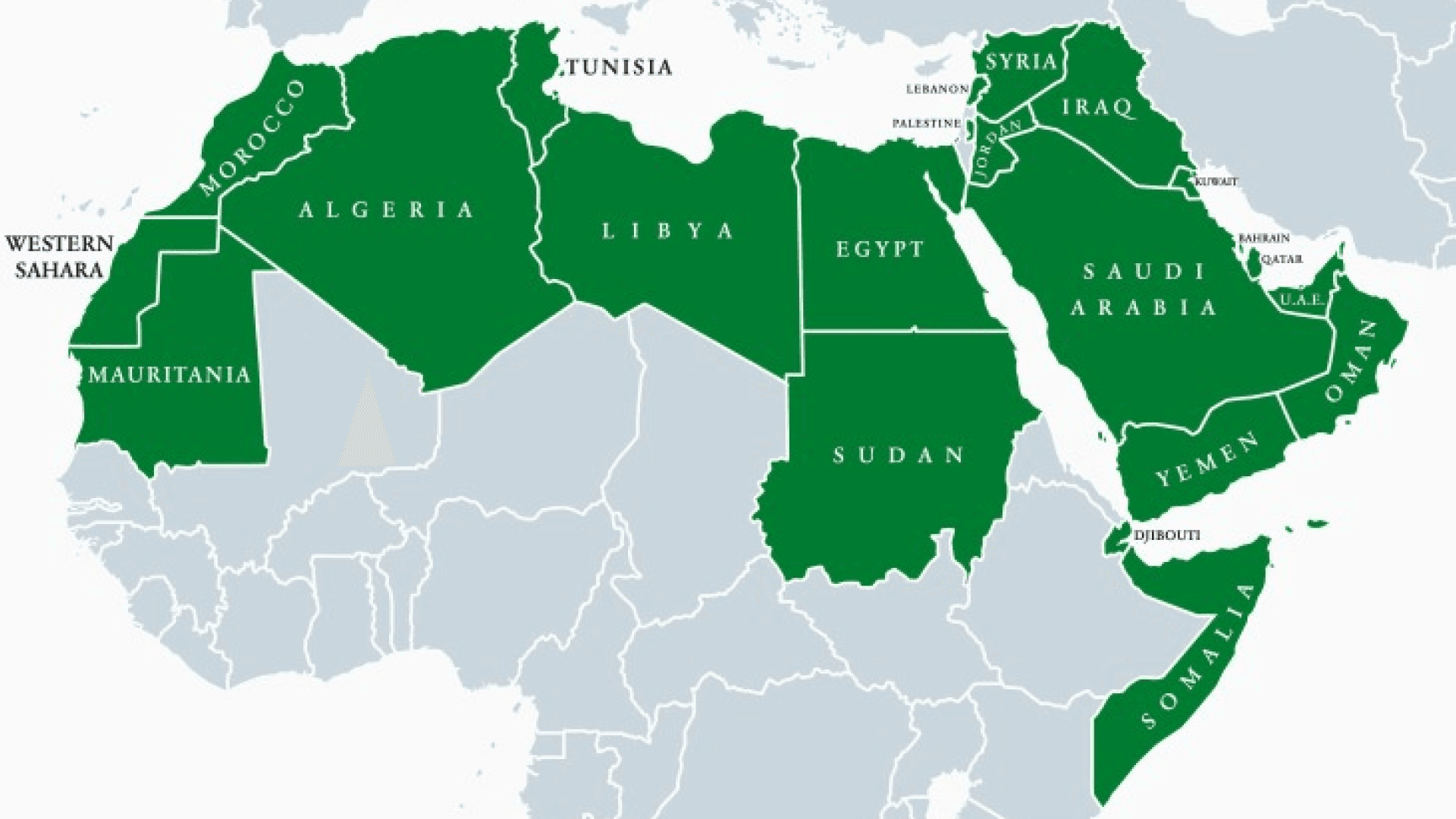
In this newsletter, we look at climate change mitigation in the dynamic Middle East & North Africa (MENA) region, examining a range of public and private sector initiatives.
With COP27 being held in Egypt’s coastal resort of Sharm el Sheikh and 2023’s COP28 scheduled to be held in Dubai, as well as sustainability concerns being raised with regard to the multiple construction projects for the Qatar World Cup, the MENA region is in the global spotlight and plenty of questions about climate change mitigation and environmental stewardship are emerging.
IRENA (International Renewable Energy Agency) estimates in its latest World Energy Transitions Outlook that the MENA region could obtain almost 26 percent of its primary energy supply from renewable sources by 2050. This figure is estimated by IRENA to be up to 53 percent in the power sector. If the region can meet these targets, IRENA estimates a reduction in CO₂ emissions equivalent to 1.1 gigatonnes per year.
Government targets across the region
In many parts of the MENA region, government targets are lagging behind jurisdictions in Western Europe and North America when it comes to setting various climate targets. It is common for MENA governments to let market forces influence the adoption of climate change mitigation and greenhouse gas emissions, instead of making big state interventions. However, more targets are now being set by different governments, especially for reducing emissions and increasing the role of renewables in the energy mix.
For example, the UAE continues to revise its emission reduction targets to become increasingly more ambitious. The latest target equates to avoiding emitting 93.2 million tonnes of CO₂ by 2030. By 2030, the UAE hopes to achieve 30 percent clean energy and 75 percent by 2050, by removing the country’s economy away from the oil that has sustained it for so many years.
Across the border in Saudi Arabia, the 2030 target is to cut carbon emissions by more than 278 million tonnes annually. Another powerful oil state, its renewable sector target is even more ambitious than the UAE – the kingdom aims to eliminate oil from power production by 2030.
In 2022, Egypt revised its carbon reduction targets. It does not set an economy‑wide target for carbon reduction; instead the government set quantified emission goals for the oil and gas, electricity generation and transport sectors. However, in regard to the country’s energy mix, the government has set an overall target of 42 percent renewables by 2030.
Wind energy is growing in prominence in the MENA region. Saudi Arabia, Egypt and Morocco, each plan to add more than a gigawatt of wind power to their respective energy mixes by 2026, according to a report by the Global Wind Energy Council. What are businesses in the MENA region doing to mitigate climate change?
A big motivator for many businesses in the MENA region that export to the European market is the requirement to comply with the EU’s Carbon Border Adjustment Mechanism. Failure to meet these stringent requirements affects the ability to export to Europe.
Public‑private partnerships play a prominent role in sustainable development investment in the region. Perhaps the biggest and most prominent example is the NEOM development in Saudi Arabia. It is the flagship project for Saudi’s Vision 2030 initiative, which was launched in 2016 to unlock potential by “creating a diversified, innovative and world leading nation, for the benefit of future generations.”
NEOM projects involve such initiatives as smart cities powered entirely by renewable energy and zero‑emission transport solutions. They are attracting global investors – in November 2022, NEOM announced investment from German and French partners in water, energy and advanced manufacturing.
Saudi Arabia’s Red Sea Global, a major development on the Red Sea coast, aims to align its activities with all 17 Sustainable Development Goals and state‑owned enterprises such as Saudi Aramco has made ESG goals a matter of critical importance to balance profitability, environmental protection and the growth of communities where it operates.
Technology development and investment can play a more important role in helping meet climate goals in the MENA region. For example, Mai Abdellahm, President – North Africa for GE International Markets, says it is “important to focus on technology and act with urgency by building on existing technologies to reduce emissions for the purpose of reliability, affordability and security of supply of energy in the future, while also investing in new technology, such as renewables, coal‑to‑gas switching, and modernising digital and physical grid assets.”
Again, public‑private partnerships are important with Abdellahm saying it is “equally important to work together with the larger ecosystem, from government entities to regulators to private companies and NGOs.”
Stock exchange and financial regulator involvement is emerging MENA. The UAE Sustainable Finance Working Group comprises Federal and financial free zone regulators, relevant governmental bodies, and ministries, as well as securities exchanges within the UAE.
Abu Dhabi Global Market (ADGM) launched the world’s first regulated carbon credit exchange and clearing house. Based in the UAE capital, it is the world’s first fully regulated voluntary carbon credit trading exchange and clearing house and the first regulated voluntary carbon market (VCM) in the Middle East region. ADGM has partnered with ACX, which was launched in Singapore in 2021.
The initiative regulates carbon credits and offsets as emission instruments and issues licences for exchanges to operate spot and derivative markets. The regulatory framework allows companies to trade and finance carbon credits like conventional financial assets.
Also in the UAE, the Dubai International Financial Centre’s (DIFC) Dubai Financial Services Authority (DFSA), launched DFSA ESG Hub. This serves as a discussion and consultation platform on ESG matters to benefit DIFC firms and the DFSA when it comes to making progress in championing sustainable finance in Dubai.
In 2018, the Saudi Exchange became a partner exchange to support UN Sustainable Stock Exchanges. This means the Saudi Exchange has issued ESG disclosure guidance and promotes an ESG disclosure culture to deliver on socio‑economic and environmental responsibilities. In addition, Saudi’s Capital Market Authority, which regulates listed companies in the kingdom, published corporate governance regulations on ESG topics, including social and environmental responsibility initiatives.
Banking sector involvement in sustainability
In Qatar, the banking sector has boosted its commitment to ESG goals, according to PwC’s September 2022 Qatar Banking Sector Report. The sector has regained stability and bounced back after challenges in recent years, including the pandemic and a three‑year blockade by the UAE, Saudi Arabia, Bahrain and Egypt that ended in January 2021.
“To promote this long‑term stability, we expect the sector to embrace new technology, ESG and ethical banking,” says Ahmed AlKiswani, Qatar financial services leader, PwC Middle East. “Embracing ESG frameworks and sustainable banking at the core of banking operations is the need of the hour and fortunately, banks in Qatar are ensuring that ESG is at the top of their agendas.”
In May 2022, Amethis, the European Bank for Reconstruction and Development (EBRD) and SPE Capital acquired a major stake in GlobalCorp, a Cairo‑based non‑banking financial services institution. A major aim of this acquisition is to promote ESG goals within the country’s non‑banking financial services sector, particularly among small‑ and medium‑sized enterprises.
Abu Dhabi Islamic Bank (ADIB) announced plans at the end of Q3 2022 to “embed sustainability and ESG frameworks into the existing Islamic banking DNA to ensure a sustainable future for the bank and its customers and the wider community it serves.”